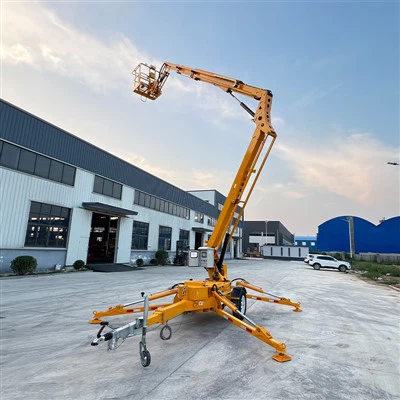
Hey there, fellow filmmakers and photographers! I'm a supplier of boom lifts, and I know how crucial these machines are for getting those epic shots from above. But let's face it, working with a boom lift isn't without its risks. That's why I'm here to share some safety precautions you should take when using a boom lift for filming and photography.
Pre - operation Checks
Before you even think about climbing onto a boom lift, you've gotta do a thorough pre - operation check. First off, take a good look at the lift itself. Check for any visible signs of damage like cracks in the boom, loose bolts, or leaks in the hydraulic system. If you spot anything suspicious, don't use the lift. Instead, call in a professional to fix it.
Another important thing is to check the tires. Make sure they're properly inflated, and there's no major wear and tear. Unevenly inflated tires can cause the lift to be unstable, which is a big no - no when you're up in the air.
You also need to test all the controls. Move the boom up, down, forward, and backward. Check the emergency stop button to make sure it works. All the functions should respond smoothly and as expected. If you notice any problems with the controls, it's best to get them fixed right away before you start your filming or photography session.
Operator Training
This can't be stressed enough. Only trained and certified operators should be using the boom lift. Operating a boom lift isn't as simple as just pushing a few buttons. There are a lot of things to know about its proper use, such as how to maneuver it safely around obstacles, how to adjust the height and angle accurately, and how to handle emergencies.
As a boom lift supplier, I always recommend that operators go through comprehensive training programs. These programs cover everything from the basic mechanics of the lift to advanced safety procedures. And it's not just a one - time thing. Operators should also get regular refresher courses to keep their skills sharp.
Safety Equipment
Wearing the right safety equipment is a must when using a boom lift. The most important piece is a harness. A good quality harness will keep you securely attached to the lift in case of any sudden movements or jolts. Make sure the harness fits you properly and is in good condition. Check for any frayed straps or broken buckles before you put it on.
You should also wear a hard hat. Even though you're in a boom lift, there's still a risk of objects falling from above. A hard hat will protect your head from any potential impacts.
Safety glasses are another essential item. They'll shield your eyes from dust, debris, and any small particles that might be flying around during your filming or photography work.
Site Assessment
Before setting up the boom lift, you need to assess the site. Look for any potential hazards like uneven ground, overhead power lines, or nearby traffic. If the ground is uneven, the lift could tip over, so you need to make sure it's level. You might need to use leveling pads to stabilize the lift.
Overhead power lines are extremely dangerous. Make sure you know the distance between the lift and the power lines at all times. In many places, there are strict regulations about how close you can get to power lines. If you're unsure, contact the local power company for guidance.
Also, think about the traffic situation around the site. If there are moving vehicles, you need to take steps to keep the area safe. You might need to set up cones or barriers to prevent vehicles from getting too close to the lift.
Using the Right Boom Lift
There are different types of boom lifts available, and choosing the right one for your filming or photography needs is important. For example, if you need a lot of reach and flexibility, an Articulate Boom Lift might be a good choice. These lifts have multiple joints that allow you to maneuver the boom into different positions easily.
If you're working in a more open area and need to reach high up, an Electric Telescopic Boom Lift could be ideal. They offer a straight, extended reach and are often powered by electricity, which is more environmentally friendly and quieter.
And if you need to move the lift around the site easily, a Towable Aerial Work Platform is a great option. You can tow it behind a vehicle and set it up quickly at different locations.
Weather Conditions
Weather can have a big impact on the safety of using a boom lift. Strong winds pose a significant risk as they can make the lift unstable. Before you start using the lift, check the weather forecast. If there are high winds expected, it's best to postpone your work.


Rain and snow can also create slippery conditions on the platform and the ground. Make sure to dry the platform thoroughly before getting on it if it's wet. If the weather is really bad, with heavy rain, thunderstorms, or ice, don't use the lift at all.
Weight Limit
Every boom lift has a weight limit, and it's crucial to stay within it. This limit includes the weight of the operator, any equipment they're carrying, and the camera gear. Overloading the lift can cause it to malfunction or tip over. So, before you start loading up the lift, check the weight limit and make sure you don't exceed it.
Emergency Procedures
You need to know what to do in case of an emergency. Every boom lift should have an emergency stop button, and you should know where it is and how to use it. In case of a power failure, there are usually manual lowering mechanisms. Make sure you're familiar with how these work.
It's also a good idea to have a communication plan in place. Let someone on the ground know your location and what you're doing. They can call for help if something goes wrong.
Maintenance
Regular maintenance is key to keeping your boom lift safe. As a supplier, I recommend following the manufacturer's maintenance schedule. This includes things like oil changes, filter replacements, and inspections of the mechanical and electrical systems.
If you notice any strange noises or vibrations while using the lift, stop immediately and get it checked out. Ignoring these signs could lead to more serious problems and increase the risk of an accident.
Well, there you have it, folks! These are the main safety precautions you should take when using a boom lift for filming and photography. Remember, safety should always be your top priority. If you have any questions about boom lifts or need help choosing the right one for your projects, don't hesitate to reach out. We're here to help you get the best equipment and ensure that your filming and photography work goes smoothly and, most importantly, safely.
References
- OSHA (Occupational Safety and Health Administration) guidelines on aerial lift safety
- Manufacturer's manuals for boom lifts