Hey there! I'm a supplier of container ramps, and today I'm gonna talk about the materials that container ramps are made of. It's super important to know what goes into these ramps because it affects their performance, durability, and cost. So, let's dive right in!
Steel
Steel is hands down the most common material for container ramps. And there's a good reason for that. It's strong, durable, and can handle heavy loads. Whether you're loading up a big container with all sorts of goods or using heavy machinery on the ramp, steel can take it.
There are different types of steel used in container ramps. Mild steel is a popular choice. It's relatively inexpensive and easy to work with. You can shape it into different designs and sizes according to your needs. For example, if you need a ramp with a specific slope or length, mild steel can be cut and welded to fit the bill.


Another type is stainless steel. This is a bit more expensive, but it has some great advantages. Stainless steel is resistant to corrosion, which means it can last longer, especially in harsh environments. If your container ramps are going to be used near the ocean or in areas with high humidity, stainless steel is a smart choice. It won't rust or corrode easily, so you won't have to worry about frequent maintenance.
Aluminum
Aluminum is another material that's used for container ramps. One of the biggest advantages of aluminum is its light weight. Compared to steel, aluminum ramps are much easier to move around. This is great if you need to relocate the ramp frequently. For example, if you have a mobile operation where you need to set up the ramp at different locations, an aluminum ramp will be a lot more convenient.
Aluminum is also resistant to corrosion, just like stainless steel. It forms a protective oxide layer on its surface, which helps prevent rust and other forms of corrosion. This makes it a good option for outdoor use. However, it's not as strong as steel. So, if you're dealing with extremely heavy loads, an aluminum ramp might not be the best choice. But for lighter loads, it works just fine.
Wood
Wood was once a popular material for container ramps, but it's not as common these days. The main reason is that wood is not as durable as steel or aluminum. It can rot, warp, and be damaged by insects. However, wood does have some advantages. It's relatively inexpensive and easy to work with. If you're on a tight budget and don't need a ramp that will last for a long time, wood might be an option.
Wood ramps can also provide a more natural look. If you're using the ramp in a setting where aesthetics matter, like a garden or a small-scale operation, a wooden ramp can add a nice touch. But you'll need to take extra care of it. You'll have to treat the wood with preservatives to prevent rot and insect damage.
Composite Materials
Composite materials are becoming more and more popular for container ramps. These materials are made by combining different substances, like fiberglass and resin. The advantage of composite materials is that they can be designed to have specific properties. For example, they can be made to be strong, lightweight, and resistant to corrosion.
Composite ramps are also easy to maintain. They don't require the same level of upkeep as steel or wood ramps. And they can be molded into different shapes and sizes, which gives you more flexibility in design. However, composite materials can be more expensive than other options.
Choosing the Right Material
So, how do you choose the right material for your container ramp? Well, it depends on a few factors. First, think about the load capacity. If you're going to be loading heavy equipment or large containers, you'll need a ramp made of a strong material like steel. On the other hand, if you're dealing with lighter loads, aluminum or a composite material might be sufficient.
The environment where the ramp will be used is also important. If it's going to be outdoors in a harsh environment, you'll want a material that's resistant to corrosion, like stainless steel or aluminum. If it's indoors or in a less demanding environment, mild steel or wood might be okay.
Cost is another factor. Steel is generally more expensive than wood, but it offers better durability. Aluminum and composite materials can also be on the pricier side, but they come with their own set of advantages. You'll need to balance your budget with your requirements.
Our Products
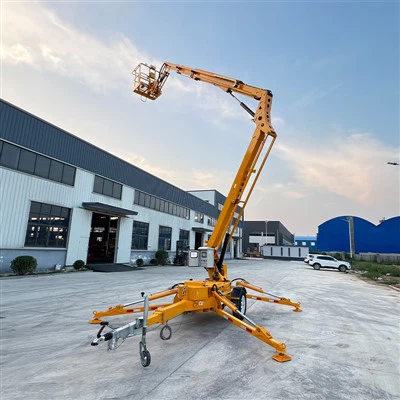
As a container ramp supplier, we offer a wide range of ramps made from different materials. We have Hydraulic Loading Ramp and Hydraulic Dock Ramp made of high-quality steel. These ramps are designed to handle heavy loads and are built to last. We also have Telescopic Boom Lift options that are made from a combination of steel and aluminum for a perfect balance of strength and weight.
If you're in the market for a container ramp, we'd love to talk to you. Our team of experts can help you choose the right material and design for your specific needs. Whether you're a small business or a large corporation, we have the solution for you. So, don't hesitate to reach out and start a conversation about your container ramp requirements.
References
- Engineering Materials Handbook, ASM International
- Construction Materials: Their Nature and Behaviour, John Newman and Robert Chudley