Hey there! I'm a supplier of dock ramps, and today I wanna talk about a common question: Can a dock ramp be used on uneven surfaces?
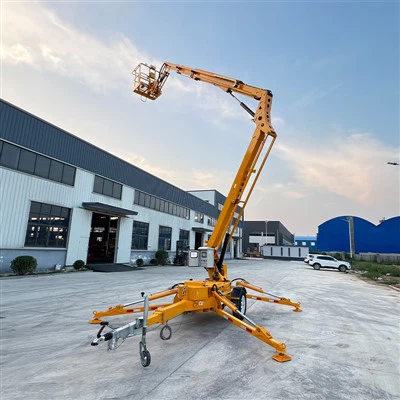
Let's start by understanding what dock ramps are. Dock ramps are essential equipment for loading and unloading goods between trucks and warehouses. They come in different types, like Hydraulic Loading Ramp, Telescopic Boom Lift, and Mobile Loading Ramp. Each type has its own features and is designed to meet various needs.
Now, back to the main question. Using a dock ramp on uneven surfaces is a bit of a tricky situation. On one hand, some modern dock ramps are built with features that can handle a certain degree of unevenness. For example, hydraulic dock ramps often have adjustable legs. These legs can be extended or retracted to level the ramp, allowing it to adapt to minor irregularities on the ground. This means that if the unevenness is not too extreme, you might be able to use the ramp safely.
However, there are also some limitations. If the surface is extremely uneven, like having large potholes or significant slopes, it can pose serious risks. First of all, an unstable ramp can lead to accidents. When a forklift or other equipment is moving on the ramp, any sudden shift or tilt can cause it to tip over, endangering the operator and the goods. Also, uneven surfaces can put extra stress on the ramp itself. Over time, this can lead to structural damage, reducing the ramp's lifespan and potentially making it unsafe to use.

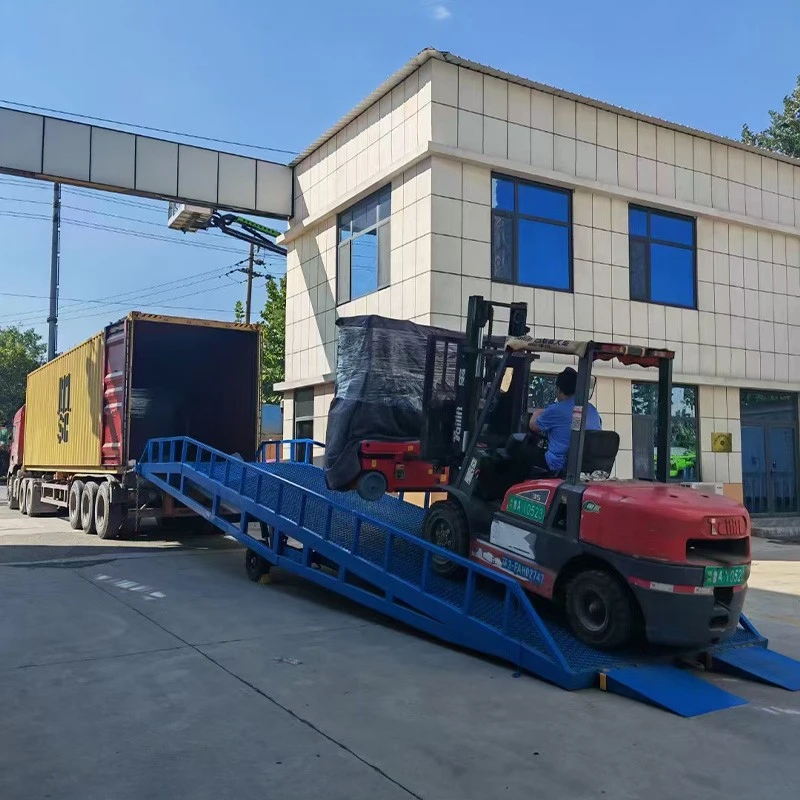
Another aspect to consider is the weight capacity. Uneven surfaces can affect how the weight is distributed on the ramp. If the weight is not evenly distributed, it can exceed the ramp's weight limit in certain areas, leading to failures. So, even if the ramp seems to be standing on an uneven surface, it might not be able to handle the intended load safely.
So, what should you do if you have an uneven surface and need to use a dock ramp? First, assess the degree of unevenness. If it's just a minor bump or a slight slope, you can try using a ramp with adjustable features. But if the surface is severely uneven, it's better to level the ground first. You can use materials like gravel or concrete to fill in the low spots and create a more stable base for the ramp.
It's also important to do regular inspections. Check the ramp for any signs of damage or wear, especially if it's been used on an uneven surface. Make sure all the components, like the legs, hinges, and hydraulic systems, are in good working condition.
In some cases, you might need to choose a ramp specifically designed for uneven surfaces. There are ramps on the market that are built with more robust structures and better adaptability. These ramps are usually more expensive, but they can provide a safer and more reliable solution for challenging environments.
As a dock ramp supplier, I've seen many customers facing this issue. And I always recommend that they take the time to evaluate their situation carefully. Don't just assume that any ramp will work on any surface. It's better to invest in the right equipment and take the necessary precautions to ensure safety.
If you're in the market for a dock ramp and have an uneven surface to deal with, I'd be more than happy to help. We have a wide range of dock ramps that can meet different needs. Whether you need a hydraulic ramp for heavy-duty use or a mobile ramp for more flexibility, we've got you covered. Just reach out to us, and we can discuss the best solution for your specific situation. Let's work together to find the perfect dock ramp for your business!
References
- General knowledge of dock ramp engineering and safety standards.
- Industry experience in supplying dock ramps.