

Hey there! As a supplier of single mast lifts, I know how crucial it is to keep these machines in top - notch condition. One of the most important parts of a single mast lift is the mast itself. In this blog, I'll share with you how to inspect the mast of a single mast lift.
Pre - inspection Preparations
Before you start inspecting the mast, you need to do a few things. First, make sure the lift is turned off and parked on a flat, stable surface. This will prevent any accidental movement during the inspection. Also, gather the necessary tools like a flashlight, a measuring tape, and a wrench.

Visual Inspection
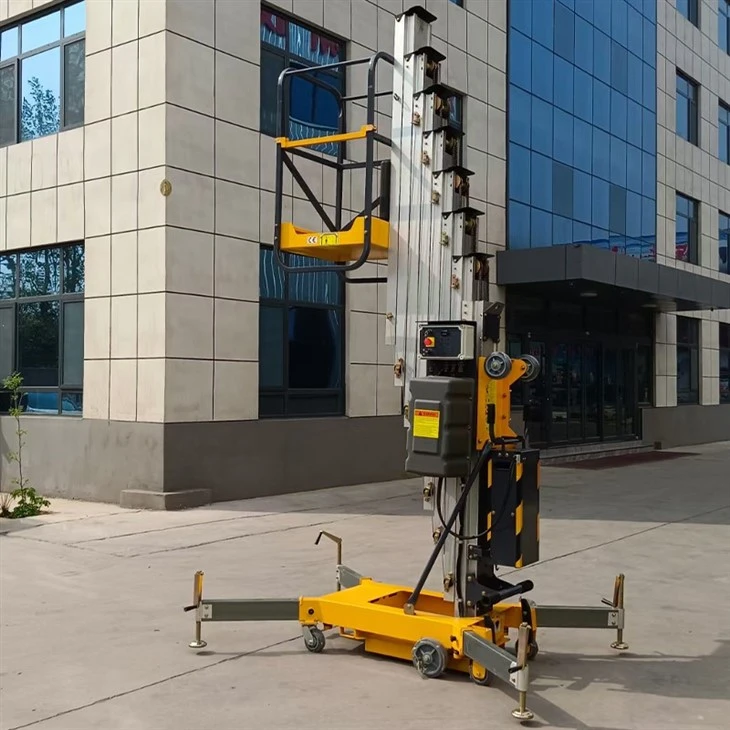
The first step in inspecting the mast is a visual check. Walk around the mast and look for any obvious signs of damage. Check for cracks, dents, or any signs of corrosion. Cracks can be a serious problem as they can weaken the structure of the mast. Even small cracks can grow over time and lead to a catastrophic failure.
If you notice any dents, they might not always be a major issue, but they can indicate that the mast has been subjected to some impact. Corrosion is another concern, especially if the lift is used in a harsh environment. Rust can eat away at the metal and reduce the mast's strength.
Check the Mast Structure
Next, take a closer look at the mast's structure. Examine the welds. Welds are what hold the different parts of the mast together. Look for any signs of weld failure, such as cracks or gaps in the welds. If you find any issues with the welds, it's important to have them repaired by a professional.
Also, check the alignment of the mast. The mast should be straight and vertical. You can use a plumb line or a level to check the alignment. If the mast is misaligned, it can cause problems with the lift's operation and safety.
Inspect the Guide Rails
The guide rails are an important part of the mast. They help the platform move up and down smoothly. Check the guide rails for any signs of wear or damage. Look for scratches, grooves, or any signs of deformation. If the guide rails are worn, the platform might not move as smoothly, which can lead to a rough ride and potential safety issues.
You can also check the rollers that run along the guide rails. Make sure they are in good condition and rotate freely. If the rollers are damaged or not rotating properly, it can cause the platform to jam or move unevenly.
Examine the Hydraulic System (if applicable)
Many single mast lifts use a hydraulic system to raise and lower the platform. If your lift has a hydraulic system, inspect the hydraulic hoses and cylinders. Look for any signs of leaks, such as oil stains or wet spots on the hoses or cylinders. Leaks can not only reduce the efficiency of the hydraulic system but also pose a safety hazard.
Check the hydraulic fluid level. The fluid level should be within the recommended range. If the fluid level is low, it could indicate a leak or a problem with the system. Also, check the condition of the hydraulic fluid. It should be clean and free of debris. If the fluid is dirty or contaminated, it can cause damage to the hydraulic components.
Test the Safety Features
Safety features are an essential part of any single mast lift. Check the safety switches, limit switches, and emergency stop buttons. Make sure they are all working properly. Test the safety switches by simulating different conditions to see if they trigger the appropriate response.
The limit switches are designed to stop the platform from going beyond its safe limits. Test these switches to ensure they are functioning correctly. The emergency stop button should be easily accessible and should immediately stop the lift when pressed.
Lubrication
Proper lubrication is key to keeping the mast in good working condition. Check the lubrication points on the mast, such as the pivot points and the guide rails. Make sure they are well - lubricated. Use the recommended lubricant for your lift. Over - lubrication can attract dirt and debris, while under - lubrication can cause excessive wear.
Documentation
After the inspection, it's important to document your findings. Keep a record of the inspection, including any issues you found and the actions you took to address them. This documentation can be useful for future reference and for compliance purposes.
Conclusion
Inspecting the mast of a single mast lift is a crucial part of maintenance. By following these steps, you can ensure that your lift is safe and in good working condition. If you're in the market for a single mast lift, we offer a variety of options. Check out our Aluminum Single Man Lift, Push - Around Aluminum Single Mast Lift, and Vertical Mast Lift.
If you have any questions about our products or need more information on mast inspections, feel free to reach out. We're here to help you make the best decision for your needs. Whether you're a contractor, a facility manager, or someone in need of a reliable single mast lift, we've got you covered.
References
- Industry standards for aerial work platforms
- Manufacturer's manual for single mast lifts


