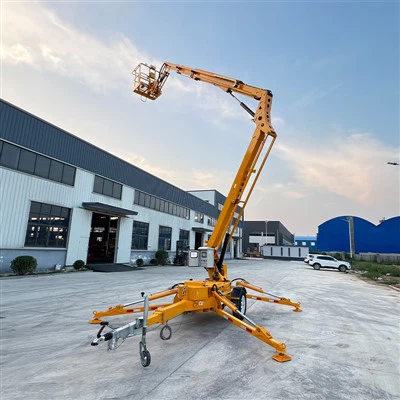
The speed of a vertical mast lift's ascent and descent is a crucial factor that impacts both productivity and safety in various work scenarios. As a trusted supplier of vertical mast lifts, I've witnessed firsthand how these speeds can make or break a project. In this blog, we'll delve into the details of what determines these speeds, their implications, and how our products stack up in the market.


Understanding the Basics of Vertical Mast Lift Speed
Before we explore the ascent and descent speeds, it's essential to understand what a vertical mast lift is. A vertical mast lift is a type of aerial work platform designed to provide vertical access to elevated work areas. These lifts are commonly used in construction, maintenance, and warehousing, among other industries.
The ascent speed refers to how quickly the lift moves from the ground level to the maximum working height. Conversely, the descent speed is the rate at which the lift returns to the ground. These speeds are typically measured in feet per minute (ft/min) or meters per minute (m/min).
Factors Affecting Ascent and Descent Speeds
Several factors influence the speed of a vertical mast lift's ascent and descent. One of the primary factors is the power source. Electric vertical mast lifts, for example, tend to have consistent and reliable speeds. They are powered by batteries, which provide a steady flow of energy to the lift's motor. This results in smooth and efficient operation, with ascent speeds ranging from 10 to 20 ft/min (3 to 6 m/min) on average.
On the other hand, hydraulic vertical mast lifts rely on hydraulic fluid to power the lifting mechanism. The speed of these lifts can be affected by the viscosity of the hydraulic fluid, which can change with temperature. In colder temperatures, the fluid may become thicker, slowing down the lift's operation. However, hydraulic lifts can often achieve higher ascent speeds than electric lifts, sometimes reaching up to 30 ft/min (9 m/min).
Another factor is the load capacity of the lift. A lift carrying a heavier load will generally ascend and descend more slowly than one with a lighter load. This is because the motor or hydraulic system has to work harder to move the additional weight. Most vertical mast lifts are designed to handle a specific maximum load, and the speed specifications are usually based on this maximum capacity.
The design and construction of the lift also play a role. Lifts with advanced engineering and high - quality components are likely to have more precise speed control and better overall performance. For instance, lifts with well - calibrated motors and smooth - operating hydraulic cylinders will have more consistent ascent and descent speeds.
Importance of Ascent and Descent Speeds
The speed of a vertical mast lift's ascent and descent can have a significant impact on productivity. In a busy construction site or warehouse, every minute counts. A faster lift can reduce the time it takes to reach the work area and return to the ground, allowing workers to complete more tasks in a day. This can lead to increased efficiency and potentially lower labor costs.
Safety is another critical aspect. A lift with a stable and predictable ascent and descent speed is less likely to cause accidents. Sudden changes in speed can startle workers and lead to loss of balance or equipment damage. That's why it's essential to choose a lift with reliable speed control.
Our Vertical Mast Lift Offerings
As a supplier, we offer a range of vertical mast lifts to meet different customer needs. Our Vertical Mast Lifts For Aerial Work are designed with efficiency and safety in mind. These lifts are available in both electric and hydraulic models, allowing customers to choose the power source that best suits their requirements.
Our Push - Around Aluminum Single Mast Lift is a lightweight and portable option. It's perfect for indoor applications where maneuverability is key. Despite its compact size, it offers a decent ascent speed, ensuring that workers can quickly reach their work areas.
For more demanding outdoor or large - scale projects, our Self - propelled Single - mast Aerial Work Platform is an excellent choice. This lift is self - propelled, which means it can move around the work site independently. It also has a higher load capacity and a relatively fast ascent and descent speed, making it suitable for heavy - duty tasks.
Comparing Our Speeds with the Market
When compared to other products in the market, our vertical mast lifts offer competitive ascent and descent speeds. We've invested in research and development to optimize the performance of our lifts. Our engineers have worked hard to ensure that our lifts provide a balance between speed, safety, and reliability.
We understand that different customers have different needs. Some may prioritize speed for maximum productivity, while others may focus on safety and stability. That's why we offer a variety of models with different speed specifications, allowing customers to make an informed decision based on their specific requirements.
Maintenance and Speed
Proper maintenance is crucial for maintaining the optimal ascent and descent speeds of a vertical mast lift. Regular inspections, lubrication of moving parts, and battery checks (for electric lifts) or hydraulic fluid checks (for hydraulic lifts) can help ensure that the lift operates at its best.
If a lift is not properly maintained, it may experience a decrease in speed or other performance issues. For example, a dirty or worn - out motor can cause the lift to slow down, while a leak in the hydraulic system can lead to inconsistent speeds. By following our maintenance guidelines, customers can keep their lifts in top condition and enjoy consistent performance over time.
Conclusion
The speed of a vertical mast lift's ascent and descent is a complex yet important aspect of its performance. It's influenced by factors such as power source, load capacity, design, and maintenance. As a supplier, we are committed to providing high - quality vertical mast lifts with competitive speeds.
Whether you're looking for a lift for indoor maintenance or outdoor construction projects, our range of products can meet your needs. We encourage you to explore our offerings and contact us for more information. If you're interested in purchasing a vertical mast lift or have any questions about our products, we're here to assist you. Reach out to us to start a discussion about your specific requirements and how our vertical mast lifts can enhance your work efficiency and safety.
References
- Industry standards and guidelines for aerial work platforms.
- Manufacturer's specifications for vertical mast lifts.
- Technical research on the performance of electric and hydraulic lifting systems.