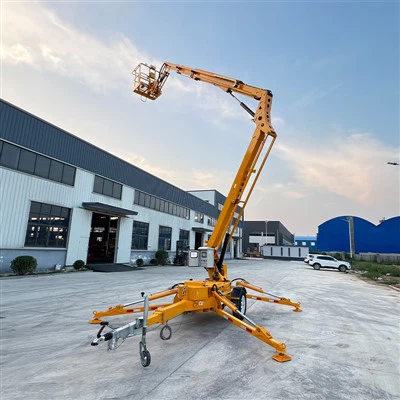
Hey there! As a boom lift supplier, I often get asked a bunch of questions. One pretty common one is, "What is the maximum weight the basket of a boom lift can carry?" Well, let's dig into this topic and break it down.
First off, it's important to understand that the maximum weight capacity of a boom lift basket isn't a one - size - fits - all number. There are a few different types of boom lifts out there, and each type has its own set of specs when it comes to weight limits.
Let's start with the Telescopic Boom Lift. These bad boys are known for their straight - extending reach. They're like the sprinters of the boom lift world, getting you up high in a straight line real fast. The maximum weight capacity of a telescopic boom lift basket can vary quite a bit depending on the model and its size. Smaller telescopic boom lifts, the ones you might use for some light maintenance work around a small building, can usually handle a basket load of around 500 to 700 pounds. These are great for one or two workers along with a few tools.
On the other hand, larger telescopic boom lifts, the heavy - hitters used in big construction projects or industrial settings, can carry a lot more. Some of these beasts can handle a maximum basket weight of up to 1,000 pounds or even more. That means you can have multiple workers up there, along with a decent amount of equipment. But remember, just because the boom lift can technically carry that much weight, it doesn't mean you can just throw anything and everything in the basket willy - nilly. You still have to follow safety guidelines.
Now, let's talk about the Articulate Boom Lift. These are the more flexible cousins of the telescopic boom lifts. They have those bendy arms that can reach around obstacles, making them super useful in tight or tricky spaces. The weight capacity of an articulate boom lift basket also depends on its size and model.
Smaller articulate boom lifts, like the ones used for indoor work or in areas with limited access, usually have a basket weight limit of around 400 to 600 pounds. This is enough for a single worker with some tools. Larger articulate boom lifts, designed for outdoor construction and industrial applications, can carry between 600 and 1,000 pounds. The ability to carry more weight comes in handy when you need to get a team of workers and their gear up to a hard - to - reach spot.
There's also something called the Boom Lift Verhicle. These are a bit different, as they're often more portable and can be towed to different job sites. Their basket weight capacities can vary widely too. Some of the smaller, more lightweight boom lift vehicles might have a basket capacity of 300 to 500 pounds, while the larger, more robust models can handle up to 800 pounds.
So, what factors actually affect the maximum weight capacity of a boom lift basket? Well, the design and engineering of the boom lift are huge factors. The materials used in the construction of the boom, the hydraulic system, and the overall structure all play a role. A well - built boom lift with high - quality materials can usually handle more weight.
The height to which the boom is extended also matters. As the boom goes up higher, the weight capacity often decreases. This is because the higher the boom is, the more stress it has to endure, and it becomes less stable. So, if you're planning to go way up high, you might have to reduce the weight in the basket.
The angle of the boom is another factor. When the boom is at a more horizontal angle, it can usually carry more weight compared to when it's at a steep vertical angle. The distribution of weight in the basket is important too. You want to make sure the weight is evenly spread out to maintain balance and stability.
Now, why is it so important to know and follow the maximum weight capacity of a boom lift basket? Safety, baby! Exceeding the weight limit can lead to some seriously bad stuff. The boom lift could tip over, which is obviously super dangerous for the workers in the basket and anyone else nearby. It can also put a lot of stress on the boom and other components, leading to mechanical failures. And let me tell you, fixing a broken boom lift is not only expensive but also takes time, which means downtime on your job site.
As a boom lift supplier, I've seen firsthand the consequences of not following weight limits. Once, I had a client who thought they could just squeeze a few extra tools into the basket, even though they were already close to the weight limit. Well, the boom lift ended up malfunctioning, and it took us days to get it back in working order. The client lost a lot of time and money on that job, and it could have all been avoided by following the rules.
If you're in the market for a boom lift, it's crucial to think about the maximum weight capacity you'll need for your specific jobs. If you're doing a lot of work with a team of workers and heavy equipment, you'll want to go for a boom lift with a higher weight capacity. On the other hand, if it's mostly solo work with light tools, a smaller boom lift might be just fine.
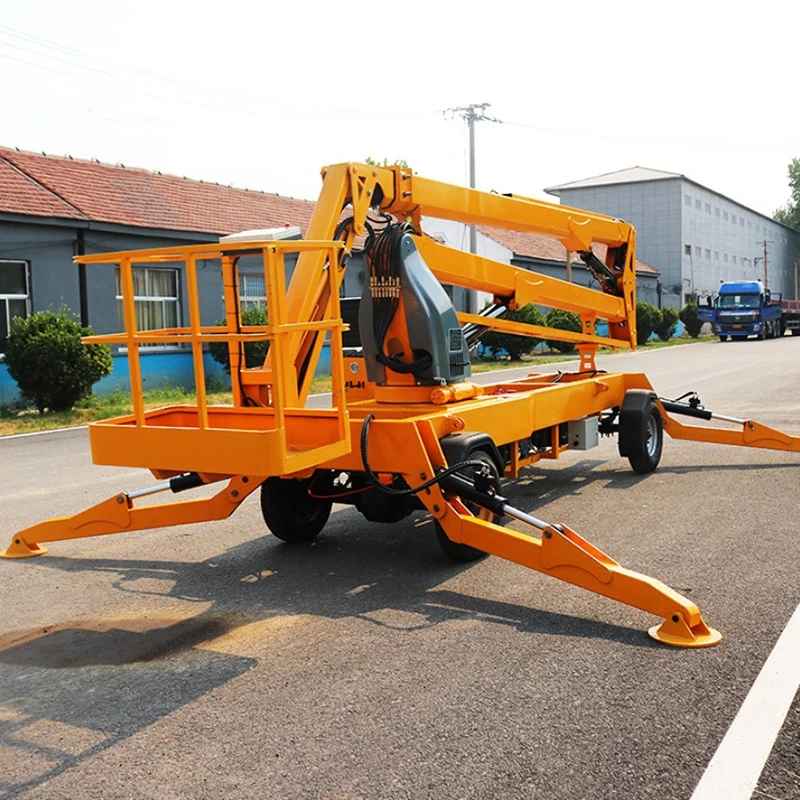

At the end of the day, understanding the maximum weight the basket of a boom lift can carry is essential for a safe and successful job. Whether you're a contractor, a maintenance worker, or someone in the industrial sector, getting the right boom lift with the appropriate weight capacity is key. And if you have any questions about which boom lift is right for you and your weight requirements, don't hesitate to reach out. We're here to help you make the best choice for your project. So, if you're interested in purchasing a boom lift or want to discuss your options further, just get in touch for a chat about procurement.
References
- Industry safety standards and regulations for boom lifts
- Product manuals of different boom lift models