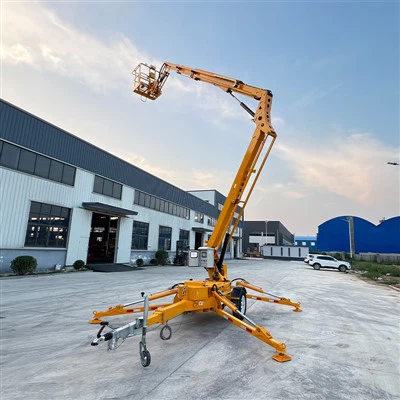
As a seasoned supplier of single mast lifts, I understand the critical importance of ensuring these machines operate at peak performance. A well - functioning single mast lift not only enhances productivity but also guarantees the safety of operators. In this blog, I'll share some comprehensive steps on how to check the performance of a single mast lift.
Pre - operation Visual Inspection
Before even powering on the single mast lift, a thorough visual inspection is essential. Start by examining the overall structure of the lift. Look for any signs of damage, such as cracks, dents, or bent components on the mast, base, and platform. Pay close attention to welds; any signs of cracking or separation can compromise the structural integrity of the lift.
Inspect the tires or wheels. They should be in good condition, with no excessive wear, cuts, or bulges. Proper tire pressure is also crucial. Incorrect tire pressure can affect the stability and maneuverability of the lift. Check the hydraulic hoses for any leaks, abrasions, or loose connections. Leaking hydraulic fluid can lead to a loss of lifting power and potential safety hazards.
Examine the electrical wiring. Look for frayed wires, loose connections, or signs of corrosion. Faulty electrical systems can cause malfunctions, including issues with the lift's controls or power supply. Ensure that all safety guards and covers are in place and securely fastened. These guards are designed to protect operators from moving parts and potential hazards.
Functionality Checks of Controls
Once the visual inspection is complete, it's time to test the controls. Start by turning on the power and familiarizing yourself with the control panel. Check all the buttons, switches, and levers for smooth operation. Press each button and verify that the corresponding function activates as expected. For example, test the up and down controls to ensure the lift can raise and lower smoothly.
Test the tilt and rotation controls if your single mast lift is equipped with these features. The movement should be precise and without any jerks or unusual noises. Check the emergency stop button. This is a critical safety feature, and it should immediately halt all lift operations when pressed. After pressing the emergency stop button, try to restart the lift to confirm that it can resume normal operation.
Hydraulic System Performance
The hydraulic system is the heart of a single mast lift, responsible for providing the power to lift and lower the platform. Check the hydraulic fluid level. It should be within the recommended range indicated on the fluid reservoir. Low hydraulic fluid can lead to poor lifting performance and potential damage to the hydraulic pump.
Operate the lift through its full range of motion while observing the hydraulic system. Listen for any unusual noises, such as whining or knocking sounds, which could indicate problems with the hydraulic pump, valves, or cylinders. Check for any signs of hydraulic fluid leakage during operation. If you notice any leaks, stop the lift immediately and address the issue.
Measure the lifting speed. The lift should raise and lower at a consistent and appropriate speed. If the lifting speed is too slow or too fast, it could indicate problems with the hydraulic system, such as a clogged filter or a faulty pump. You can refer to the manufacturer's specifications for the recommended lifting speed.
Safety Feature Checks
Safety features are of utmost importance in a single mast lift. Check the overload protection system. This feature is designed to prevent the lift from operating when it is overloaded. You can test this by adding a known weight to the platform and ensuring that the lift does not operate beyond its rated capacity.
Inspect the outriggers, if applicable. Outriggers provide additional stability when the lift is in use. Check that they can extend and retract smoothly and lock securely in place. Test the platform gates and rails. They should be strong and able to withstand a reasonable amount of force. The gates should open and close easily and latch securely.
Verify the presence and functionality of the platform fall arrest system. This system is designed to protect operators in case of a fall. Check that the harnesses, lanyards, and anchor points are in good condition and properly installed.
Load Capacity Testing
To ensure the single mast lift can handle its rated load capacity, conduct a load capacity test. This test should be performed in a controlled environment following all safety protocols. Start by loading the platform with a weight equal to the lift's rated capacity. Distribute the weight evenly on the platform.
Raise the lift to its maximum height and hold it there for a few minutes. Observe the lift for any signs of instability, such as excessive swaying or tilting. Check the hydraulic system and controls for any abnormal behavior. Lower the lift back to the ground and remove the load. Repeat this process a few times to confirm the lift's performance under load.
Comparison with Manufacturer's Specifications
Throughout the performance checks, it's essential to compare the lift's performance with the manufacturer's specifications. These specifications provide detailed information about the lift's capabilities, including its lifting capacity, speed, and operating range. If the lift's performance deviates significantly from the specifications, it could indicate a problem that needs to be addressed.
For example, if the lift's lifting speed is much slower than the specified speed, it could be due to a hydraulic system issue or a problem with the power supply. Refer to the manufacturer's manual for troubleshooting steps and recommended solutions.
Mobility and Maneuverability
If your single mast lift is self - propelled, test its mobility and maneuverability. Drive the lift forward, backward, and turn it in different directions. The movement should be smooth and responsive. Check the steering controls to ensure that the lift can be steered accurately.
Test the braking system. The lift should come to a complete stop when the brakes are applied. Check the braking distance to ensure it is within the acceptable range. Listen for any unusual noises during movement, such as screeching or grinding sounds, which could indicate problems with the wheels, bearings, or brakes.
Advanced Models: Vertical Mast With JIB and Self - propelled Options
For more advanced single mast lift models, such as the Vertical Mast With JIB and Self - propelled Vertical Mast With JIB, additional performance checks are required.
Test the JIB's extension and retraction functions. The JIB should move smoothly and lock securely in place at different positions. Check the rotation of the JIB if it is equipped with this feature. The rotation should be precise and without any binding.
For self - propelled models like the Self - propelled Vertical Mast Lift, check the battery charge level if it is battery - powered. A fully charged battery is essential for optimal performance. Monitor the battery's voltage during operation to ensure it remains within the normal range.
Regular Maintenance and Record - keeping
Performing regular performance checks is just one part of ensuring the long - term performance of a single mast lift. Regular maintenance is equally important. Follow the manufacturer's recommended maintenance schedule, which may include tasks such as changing the hydraulic fluid, replacing filters, and lubricating moving parts.
Keep detailed records of all performance checks and maintenance activities. These records can help you track the lift's performance over time, identify recurring issues, and demonstrate compliance with safety regulations. By maintaining accurate records, you can also provide valuable information to potential buyers if you decide to sell the lift in the future.


Conclusion
Checking the performance of a single mast lift is a comprehensive process that involves visual inspections, functionality tests, and performance evaluations. By following these steps, you can ensure that your single mast lift operates safely and efficiently. As a single mast lift supplier, I am committed to providing high - quality products and supporting our customers in maintaining their lifts.
If you are in the market for a single mast lift or need further assistance with performance checks and maintenance, I encourage you to reach out to us. Our team of experts is ready to help you select the right lift for your needs and provide guidance on ensuring its optimal performance.
References
- Manufacturer's manuals for single mast lifts
- Industry standards and regulations for aerial work platforms