In the dynamic landscape of industrial logistics and warehousing, the efficient movement of goods is a cornerstone of success. One crucial piece of equipment that plays a significant role in this process is the hydraulic dock ramp. As a leading supplier of Hydraulic Dock Ramp, I often encounter inquiries about the suitability of these ramps in confined spaces. This blog aims to explore this question in-depth, providing you with the information you need to make an informed decision.
Understanding Hydraulic Dock Ramps
Before delving into the question of confined spaces, it's essential to understand what a hydraulic dock ramp is and how it operates. A hydraulic dock ramp is a versatile and mobile loading and unloading solution designed to bridge the gap between a truck and a loading dock. It uses hydraulic power to adjust its height, making it compatible with different truck bed levels. This adaptability allows for seamless transfer of goods, whether it's palletized products, heavy machinery, or bulk materials.
The primary advantages of hydraulic dock ramps include their ease of use, efficiency, and safety features. The hydraulic system simplifies the process of raising and lowering the ramp, reducing the need for manual labor and minimizing the risk of injuries. Additionally, these ramps are typically equipped with anti-slip surfaces, safety barriers, and other features to ensure a secure working environment.
Challenges of Using Hydraulic Dock Ramps in Confined Spaces
While hydraulic dock ramps offer numerous benefits, using them in confined spaces presents several challenges. One of the most significant challenges is limited maneuverability. In a confined area, it can be difficult to position the ramp correctly, especially if there are obstacles or tight corners. This can lead to delays in the loading and unloading process and may even pose a safety risk if the ramp is not properly aligned.
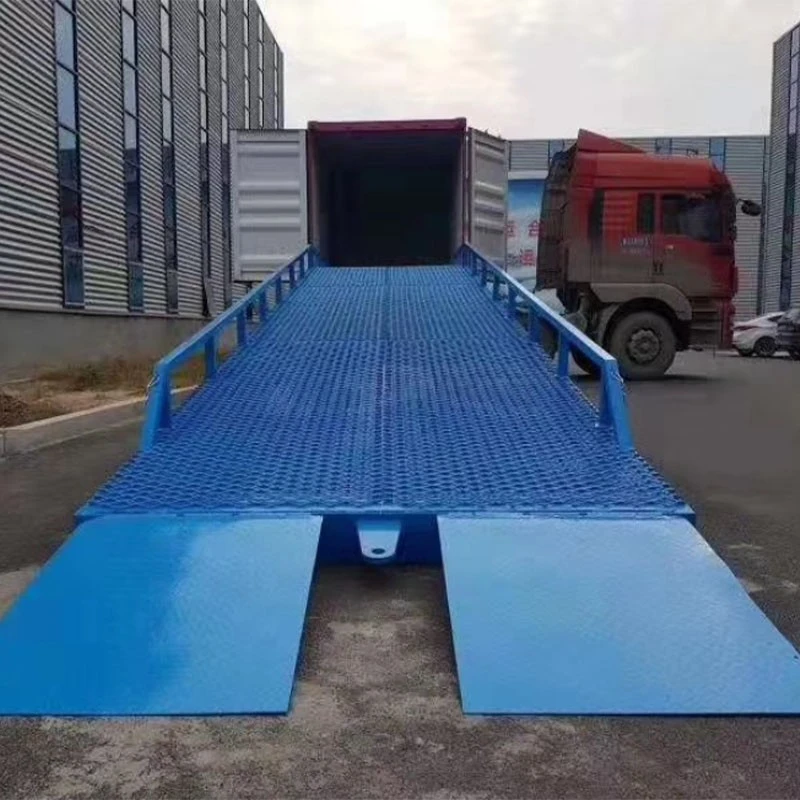

Another challenge is the space required for the ramp's operation. Hydraulic dock ramps need sufficient space to extend and retract, as well as to accommodate the movement of forklifts and other equipment. In a confined space, there may not be enough room for these operations, resulting in inefficient use of the ramp and potential damage to the equipment or the surrounding environment.
Furthermore, ventilation and access to power sources can be issues in confined spaces. Hydraulic dock ramps rely on electricity or other power sources to operate, and limited access to these sources can make it difficult to use the ramp effectively. Additionally, poor ventilation in a confined space can lead to the buildup of fumes and heat, which can be harmful to the operators and the equipment.
Solutions for Using Hydraulic Dock Ramps in Confined Spaces
Despite the challenges, there are several solutions that can make it possible to use hydraulic dock ramps in confined spaces. One option is to choose a ramp with a compact design. Mobile Dock Ramps are often more suitable for confined spaces because they can be easily moved and positioned. These ramps typically have a smaller footprint and can be adjusted to fit into tight areas.
Another solution is to optimize the layout of the confined space. By carefully planning the placement of the ramp, storage areas, and other equipment, it's possible to maximize the available space and improve the efficiency of the loading and unloading process. This may involve using vertical storage solutions, such as racking systems, to free up floor space.
In addition, advanced technology can play a crucial role in overcoming the challenges of using hydraulic dock ramps in confined spaces. For example, some ramps are equipped with sensors and automation features that can help with positioning and operation. These features can improve accuracy and safety, even in limited space.
Case Studies
To illustrate the practical application of hydraulic dock ramps in confined spaces, let's look at a few case studies.
Case Study 1: A Small Warehouse
A small warehouse with limited floor space needed to improve its loading and unloading process. The warehouse had a narrow loading area with several columns and other obstacles. By installing a compact Mobile Dock Ramp, the warehouse was able to increase its efficiency significantly. The ramp's small size allowed it to be easily maneuvered into position, and its hydraulic system made it quick and easy to adjust the height for different trucks.
Case Study 2: A Retail Store Loading Dock
A retail store with a busy loading dock faced challenges due to limited space and high traffic. The store needed a solution that could handle the volume of goods while minimizing the impact on the surrounding area. By using a hydraulic dock ramp with advanced automation features, the store was able to streamline its loading and unloading process. The ramp's sensors helped with accurate positioning, and the automation system reduced the need for manual intervention, improving safety and efficiency.
Conclusion
In conclusion, while using a hydraulic dock ramp in a confined space presents some challenges, it is definitely possible with the right approach. By choosing a ramp with a compact design, optimizing the layout of the space, and leveraging advanced technology, you can overcome these challenges and enjoy the benefits of a hydraulic dock ramp.
As a supplier of Hydraulic Dock Ramp, I am committed to providing you with the highest quality products and solutions. Whether you are looking for a ramp for a confined space or any other application, I have the expertise and experience to help you make the right choice.
If you are interested in learning more about our Dock Ramps and how they can meet your specific needs, please do not hesitate to contact me. I look forward to the opportunity to discuss your requirements and help you find the perfect solution for your business.
References
- Industrial Ramp Handbook, Industry Standards Publishing
- Hydraulic System Design and Operation, Mechanical Engineering Press
- Warehouse Layout and Efficiency, Logistics Research Institute